EVALUATING A PRODUCT BY ITS HYPE s HYPE IS EQUALLY MISLEADING AS IT ONLY REFLECTS THE VALUES AND INTERESTS OF AN ÉLITE GROUP.
As an alternative to DESIGNERISM — the formal approach based on fashion and on a restrictive evaluation of oartefacts — I propose to evaluate objects, their designs and functionalities (and their SOCIAL, ECOLOGICAL, ETHICAL implications) not according to whether or not they are 'GOOD DESIGN' ( a rather vague and arbitrary notion), but according to criteria of APPROPRIATENESS.
This means considering:
1. Whether the design performs or not the function for which it is intended,
2. if it does, HOW? [THis will enable us to identify the parameters and the values and design decisions which enabled the designed object to function as intended),
3. the mode and cost of production,
4. its longevity (is it made to last or is obsolescence built in — if it is at what rate?),
5. the visual pleasure it procures (aesthetic function, styling),
6. its affordability and social status: is it available to all (integrated in everyday life) or does it function as a CULT object for a small socio-economic group/élite?
7. The meaning/s the objects elicit/convey/suggest...
8. the integration of all the functions.
THE EVOLUTION OF DESIGN VALUES & MEANINGS
The meaning/s of objects changes through TIME, according to the interest we project on them and according to the ways TECHNOLOGICAL innovations inform our WAYS OF LIFE.
In today's context the device to make 'filo de ova' acquires a new significance in addition to the properties built in through the process of its design and manufacture, with a view to its specific (practical) function.
For those who do not use the object as intended (those who consume 'DESIGNS'; i.e. USE it SYMBOLLICALLY and AESTHETICALLY; independently of its PRACTICAL function) the artefact — in the wake of SURREALISM — acquires an INDEPENDENT existence as 'ART' / 'DESIGN'.
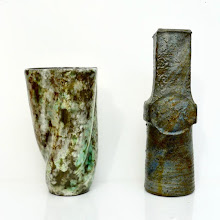
Once the BILHA lost its practical function as a container, in the RURAL CULTURE which produced it,
transposed into URBAN CULTURE, it became a SYMBOLIC OBJECT/SIGN/TEXT, in which the AESTHETIC FUNCTIONS predominates.
In the context of a folk or ETHNOGRAPHIC MUSEUM, the bilha functions primarily as a DOCUMENT of a vanished TECHNOLOGIES and WAY OF LIFE. It can also function AESTHETICALLY.
In ANTIQUE SHOPS the AESTHETIC FUNCTION combines with the DOCUMENTARY FUNCTION (satisfying a sense of nostalgia)

No comments:
Post a Comment